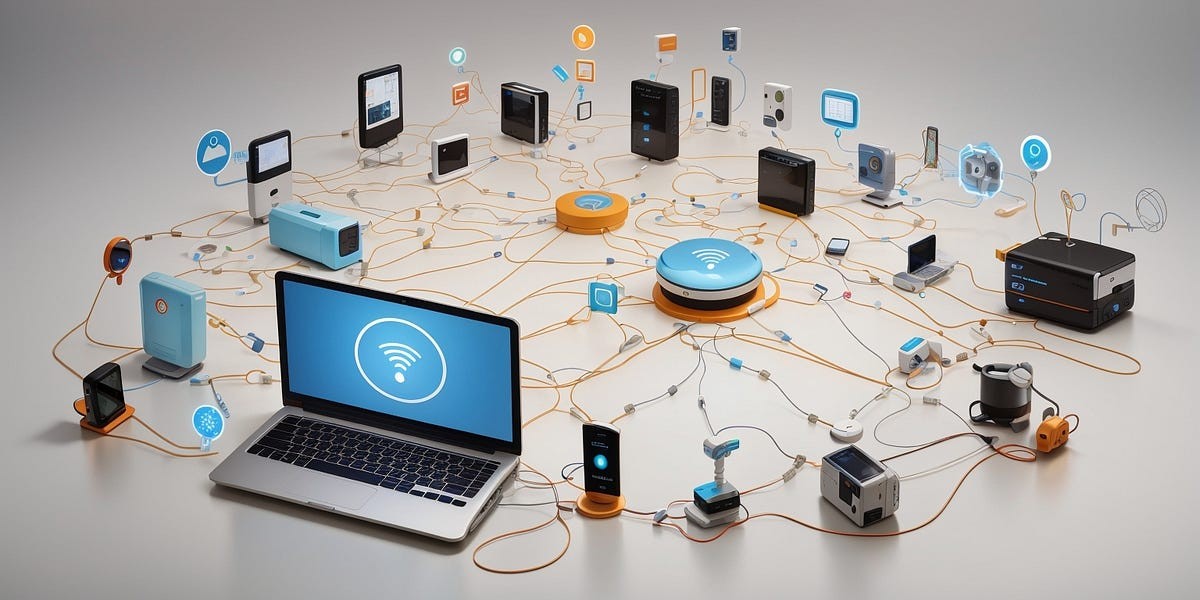
Internet of Things (IoT) Devices: Connecting the World Smarter
Introduction
Imagine a world where your coffee machine starts brewing as soon as your alarm rings, your car knows the fastest route to work, and your refrigerator orders groceries before you run out.
This is not science fiction — this is the Internet of Things (IoT) in action.
The Internet of Things (IoT) is changing the way we live, work, and interact with technology. It connects everyday devices — from smartphones and smartwatches to cars and factory machines — through the internet, allowing them to collect, share, and act on data automatically.
In this article, we’ll explore what IoT is, how it works, types of IoT devices, real-world applications, benefits, challenges, and the future of this powerful technology — all in simple terms.
What Is the Internet of Things (IoT)?
The Internet of Things (IoT) refers to a network of connected physical objects — called “things” — that communicate and exchange data through the internet.
These “things” can be anything:
- A smartwatch that tracks your heartbeat
- A thermostat that adjusts room temperature
- A car that sends data about its performance
- Even a farming sensor that checks soil moisture
In simple words:
👉 IoT means devices talking to each other — without needing constant human control.
How Does IoT Work?
The IoT system is built on four main components that work together to make devices “smart”:
1. Sensors or Devices
These collect data from the environment — such as temperature, speed, sound, or motion.
Example: A fitness tracker measures your heart rate and steps.
2. Connectivity
The device sends this data to the cloud or another device through Wi-Fi, Bluetooth, 5G, or satellite networks.
3. Data Processing
The collected data is processed by computers or servers to analyze and understand patterns.
Example: Your smartwatch analyzes sleep quality from your nightly data.
4. User Interface (UI)
Finally, the information is shared with users through an app, dashboard, or alert.
Example: You receive a phone notification when your smart doorbell detects motion.
Types of IoT Devices
IoT devices come in many forms and serve different purposes across industries. Here are the main types:
1. Consumer IoT
Devices used in everyday life to make homes and lifestyles smarter.
- Smart speakers (Amazon Echo, Google Home)
- Smart TVs
- Smartwatches (Apple Watch, Fitbit)
- Smart home security cameras
- Smart thermostats and lighting systems
2. Industrial IoT (IIoT)
Used in factories, manufacturing, and logistics to improve efficiency.
- Connected robots
- Industrial sensors
- Predictive maintenance systems
- Supply chain tracking devices
3. Healthcare IoT
Used in hospitals and personal health monitoring.
- Wearable health trackers
- Smart insulin pumps
- Remote patient monitoring devices
- Connected inhalers
4. Smart City IoT
Used by governments to manage public services efficiently.
- Smart traffic lights
- Smart waste bins
- Air quality sensors
- Connected public transport systems
5. Agricultural IoT
Used in farming and agriculture to increase productivity.
- Soil moisture sensors
- Smart irrigation systems
- Livestock monitoring devices
- Crop condition drones
6. Automotive IoT
Used in modern vehicles for safety and automation.
- Connected car systems
- GPS tracking devices
- Vehicle-to-vehicle (V2V) communication
- Autonomous driving technology
Examples of Popular IoT Devices
Here are some well-known IoT devices already in use today:
| Device | Category | Function |
|---|---|---|
| Amazon Echo / Alexa | Smart Home | Voice assistant and home automation |
| Google Nest Thermostat | Smart Home | Adjusts room temperature automatically |
| Fitbit / Apple Watch | Wearable | Tracks fitness and health data |
| Ring Doorbell | Security | Detects motion and records visitors |
| Tesla Cars | Automotive | Real-time vehicle updates and navigation |
| Philips Hue | Smart Lighting | Remote-controlled lighting system |
| DJI Agricultural Drone | Farming | Monitors crops and field conditions |
| Smart Meters | Energy | Measures and optimizes energy consumption |
Applications of IoT Devices
IoT is transforming almost every sector by automating processes and improving efficiency. Let’s look at where it’s making the biggest impact:
1. Smart Homes
Smart home devices make everyday life more convenient and energy-efficient.
Examples:
- Lights turn off automatically when you leave a room.
- Your voice assistant plays music, sets alarms, and controls other devices.
- Smart refrigerators remind you when food is running low.
Benefits:
- Saves energy and time.
- Improves security and comfort.
2. Healthcare
IoT in healthcare (often called the Internet of Medical Things) allows remote monitoring and smart diagnostics.
Examples:
- Wearable devices track heart rate, oxygen levels, and sleep.
- Hospitals use sensors to monitor patients in real time.
Benefits:
- Early disease detection.
- Reduced hospital visits.
- Personalized healthcare.
3. Transportation and Logistics
IoT helps manage vehicles, track shipments, and improve road safety.
Examples:
- Smart GPS systems track delivery trucks.
- Sensors monitor engine health and fuel levels.
- Autonomous cars use IoT for navigation and safety.
Benefits:
- Reduces delivery delays.
- Improves safety and efficiency.
- Cuts fuel costs.
4. Agriculture
IoT-powered farming tools make agriculture more efficient and sustainable.
Examples:
- Soil sensors measure moisture and nutrients.
- Automated irrigation systems water plants only when needed.
- Drones monitor crop health from above.
Benefits:
- Increases crop yield.
- Saves water and fertilizer.
- Reduces manual labor.
5. Industrial Manufacturing
Factories use Industrial IoT (IIoT) for automation and predictive maintenance.
Examples:
- Machines alert engineers before breakdowns.
- Sensors monitor temperature and pressure.
- Robots assemble products with precision.
Benefits:
- Reduces downtime.
- Increases productivity.
- Improves safety.
6. Smart Cities
IoT helps city planners manage resources and improve urban life.
Examples:
- Smart traffic systems reduce congestion.
- Waste bins send alerts when full.
- Sensors monitor air quality and pollution.
Benefits:
- Cleaner and safer cities.
- Better traffic flow.
- Reduced costs for city management.
7. Energy Management
IoT devices monitor and reduce energy usage in homes and industries.
Examples:
- Smart meters track power consumption.
- Connected solar systems adjust output based on demand.
Benefits:
- Saves electricity and money.
- Encourages renewable energy use.
Benefits of IoT Devices
IoT offers countless advantages across personal and professional environments:
- Automation – Devices work automatically without human effort.
- Efficiency – Saves time, energy, and resources.
- Convenience – Everything can be controlled from your smartphone.
- Cost Savings – Predictive maintenance and smart monitoring reduce expenses.
- Improved Safety – Real-time alerts and tracking improve security.
- Data-Driven Decisions – Businesses and users make smarter choices based on accurate data.
- Better Healthcare – Continuous monitoring and data sharing improve patient care.
- Environmental Benefits – Reduces waste, pollution, and energy consumption.
Challenges of IoT Devices
Despite the benefits, IoT also faces several challenges that need solutions:
- Privacy Concerns – Devices collect personal data that must be protected.
- Cybersecurity Risks – Hackers can target connected systems.
- Connectivity Issues – Remote areas may lack strong network coverage.
- Compatibility Problems – Different brands may not work well together.
- Cost of Implementation – Initial setup for IoT systems can be expensive.
- Battery Life – Many IoT devices rely on batteries that need regular replacement.
- Data Overload – Managing and analyzing massive data from devices can be complex.
The Role of Artificial Intelligence (AI) in IoT
AI and IoT often work together to make devices smarter and more autonomous.
This combination is called AIoT (Artificial Intelligence of Things).
Examples:
- AI analyzes sensor data to predict machine failures.
- Smart home devices learn your habits to adjust settings automatically.
- AI cameras recognize faces or detect unusual activity.
With AI, IoT devices don’t just collect data — they understand and act on it.
The Future of IoT Devices
The future of IoT looks bright and full of innovation.
Here are some key trends shaping the next decade:
- 5G Connectivity – Faster and more reliable networks for real-time communication.
- Smarter Cities – Fully connected urban systems improving transport, energy, and safety.
- Wearable Health Tech – Advanced sensors for continuous health monitoring.
- Sustainable IoT – Devices designed to reduce waste and save energy.
- AI-Powered Automation – More decision-making handled by intelligent systems.
- Edge Computing – Data processed closer to where it’s generated for faster performance.
- IoT in Education – Smart classrooms and connected learning tools.
By 2030, experts predict there will be over 25 billion connected IoT devices worldwide, transforming how humans and machines interact.
Security and Privacy in IoT
Since IoT devices handle sensitive data, cybersecurity is crucial.
To stay safe:
- Use strong passwords and multi-factor authentication.
- Keep devices updated with the latest software patches.
- Use secure Wi-Fi networks.
- Avoid sharing personal data unnecessarily.
Manufacturers are also adopting better data encryption and security protocols to protect users.
Environmental Impact of IoT
IoT can help the planet by making systems more sustainable:
- Smart irrigation saves water.
- Smart grids balance energy use.
- Smart waste management reduces pollution.
However, proper recycling of old IoT devices is essential to minimize e-waste.
Conclusion
The Internet of Things (IoT) is transforming our world into a smart, connected ecosystem where devices communicate and make life easier, safer, and more efficient.
From smart homes and connected cars to intelligent healthcare and industrial automation, IoT is at the heart of the digital revolution.
While challenges like security and privacy remain, ongoing advancements in AI, 5G, and cloud computing will continue to shape the future of IoT — making our lives more connected than ever before.
The future is smart, and it’s powered by the Internet of Things.


Post Comment