

Introduction: The Rise of Virtual Reality
Technology has always aimed to bring people closer to new experiences. Among the most exciting innovations of the 21st century is Virtual Reality (VR) — a technology that allows users to enter and interact with computer-generated environments as if they were real.
Once considered science fiction, virtual reality is now a reality that’s transforming gaming, learning, communication, and even medicine. With powerful headsets and realistic graphics, VR gives people the ability to explore new worlds, travel through time, or train for complex tasks — all without leaving their homes.
In 2025 and beyond, Virtual Reality is set to play a key role in how humans work, play, and connect with technology.
What Is Virtual Reality?
Virtual Reality refers to a simulated environment created by computers, where users can interact with 3D worlds using special devices like VR headsets, gloves, and sensors.
Unlike traditional screens, VR immerses users in a fully interactive space. It creates the illusion of presence — making you feel as if you are inside the digital world rather than observing it from the outside.
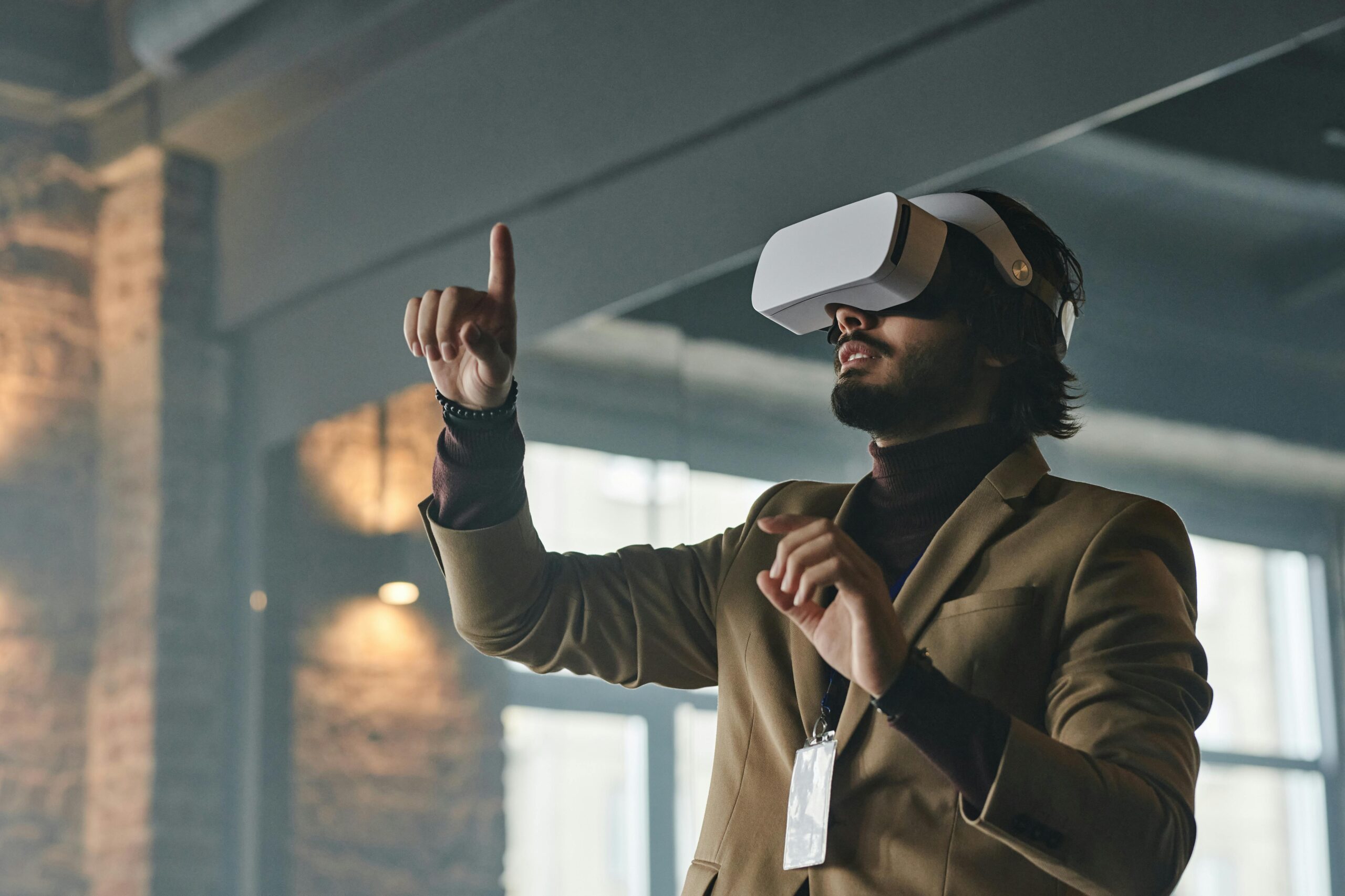
A simple example of VR is when a person wears a headset like the Meta Quest 3, HTC Vive, or PlayStation VR, and experiences a lifelike 3D world that responds to their movements.
VR can simulate real-life environments (such as walking through a city) or completely imaginary ones (like exploring outer space).
How Does Virtual Reality Work?
Virtual Reality works by combining hardware and software to create an immersive, interactive experience.
1. Hardware Components
The main hardware elements of a VR system include:
- VR Headset: Displays the virtual environment and tracks head movement.
- Motion Controllers: Allow users to interact with virtual objects using their hands.
- Sensors and Cameras: Track body position and movement for accuracy.
- Computer or Console: Processes the data and generates the virtual environment in real time.
2. Software Components
The software side of VR includes programs, games, and applications that generate 3D worlds. These systems respond to user actions, creating a dynamic, lifelike experience.
3. Tracking and Feedback
Motion tracking detects how a user moves, turns, or looks around, adjusting the virtual scene accordingly. Haptic feedback (vibrations or pressure) gives physical sensations that make interactions feel real.
In short, VR works by tricking your senses into believing that what you see, hear, and touch in the virtual world is actually happening.
The History of Virtual Reality
The idea of creating artificial worlds has existed for decades. However, modern VR became possible only with recent technological progress.
- 1950s–1960s: Early experiments began with devices like the “Sensorama,” which created multi-sensory movie experiences.
- 1980s–1990s: NASA and tech companies started developing VR for training and simulation.
- 2000s: Improvements in computer graphics and mobile technology made VR more realistic and affordable.
- 2010s: Companies like Oculus, HTC, and Sony launched VR headsets for gaming and entertainment.
- 2020s: VR is now used in education, healthcare, architecture, tourism, and remote work.
Today, Virtual Reality is not limited to gaming — it’s becoming a part of everyday professional and personal life.
Types of Virtual Reality
There are three main types of VR experiences based on immersion level:
1. Non-Immersive VR
This involves interacting with a virtual world through a computer screen, such as video games or simulations. The user is aware they are outside the environment.
2. Semi-Immersive VR
This provides a more realistic experience through large screens or projection systems. Flight simulators and training systems for pilots are examples of semi-immersive VR.
3. Fully Immersive VR
This is the most advanced form, where users wear headsets and motion sensors that completely surround them with a 3D environment. They can look, walk, and interact within the virtual world naturally.
Fully immersive VR is the kind used in gaming, virtual tours, and advanced training programs.
Applications of Virtual Reality
Virtual Reality is no longer limited to entertainment. It’s now transforming almost every major industry.
1. Gaming and Entertainment
VR gaming offers players an unmatched level of immersion. Instead of controlling a character on a screen, players become the character.
Popular VR games like Beat Saber, Half-Life: Alyx, and Resident Evil 4 VR provide realistic interactions that traditional games cannot match.
In entertainment, VR concerts, movies, and virtual theme parks are becoming increasingly popular, allowing audiences to enjoy events from home.
2. Education and Training
VR makes learning more engaging by allowing students to explore historical sites, practice science experiments, or study human anatomy in 3D environments.
Medical students can perform virtual surgeries, and engineers can design and test products before creating physical models.
Virtual classrooms also make education more accessible, especially for remote learners.
3. Healthcare
In medicine, VR helps train doctors, plan surgeries, and treat patients. Surgeons use VR simulations to practice complex procedures safely.
Therapists use VR to treat anxiety, phobias, and PTSD by exposing patients to controlled virtual situations. It’s also used for physical rehabilitation through interactive exercises.
4. Business and Remote Work
Companies use VR for meetings, presentations, and virtual product demos. Employees can collaborate in virtual offices, improving productivity and communication.
Brands also use VR marketing to let customers “try before they buy,” such as viewing a hotel room or car interior in 3D before making a purchase.
5. Real Estate and Architecture
Architects use VR to visualize building designs in 3D, helping clients explore virtual models of their projects before construction begins.
Real estate agents offer virtual property tours, saving time for both buyers and sellers.
6. Tourism and Travel
VR allows people to visit destinations virtually before booking a trip. Museums and heritage sites offer immersive VR experiences to attract global audiences.
7. Military and Aviation
VR simulators are used for pilot and soldier training, reducing risk and cost. These simulations teach decision-making, strategy, and technical skills in safe environments.
Advantages of Virtual Reality
Virtual Reality provides many benefits across industries and for personal use:
- Immersive Learning: Enhances understanding by providing hands-on experiences.
- Safe Training: Allows professionals to practice risky tasks without real-world danger.
- Improved Engagement: Makes education, marketing, and entertainment more interactive.
- Accessibility: Enables people to experience places and activities they might never visit physically.
- Innovation in Business: Helps companies create realistic prototypes and training systems.
- Emotional Impact: Creates strong emotional connections in storytelling and therapy.
Challenges and Limitations of Virtual Reality
Despite its advantages, VR still faces several challenges:
- High Cost: Advanced VR headsets and systems can be expensive.
- Technical Requirements: Requires strong hardware and internet connectivity.
- Motion Sickness: Some users experience discomfort due to mismatched motion cues.
- Limited Content: While growing, the number of high-quality VR applications is still limited.
- Privacy Concerns: As VR collects motion and biometric data, user privacy must be protected.
Continuous improvements in technology are addressing these issues, making VR more accessible and comfortable.
Difference Between Virtual Reality and Augmented Reality
While Virtual Reality creates an entirely digital environment, Augmented Reality (AR) adds digital elements to the real world.
For example:
- VR lets you explore a virtual museum.
- AR overlays digital information, such as showing details about an artifact when viewed through a phone camera.
Both technologies are closely related and are often used together — known as Mixed Reality (MR) — in modern applications.
The Future of Virtual Reality
The future of Virtual Reality is bright, as it continues to evolve rapidly. Experts predict that by 2030, VR will become as common as smartphones are today.
Here are some key trends shaping the future:
- Wireless VR Headsets: Devices will become lighter, more affordable, and untethered.
- AI Integration: Artificial Intelligence will make virtual environments smarter and more realistic.
- Virtual Collaboration: VR workplaces will replace traditional video meetings.
- Healthcare Advancements: More medical training and therapy will use VR technology.
- Education Expansion: Schools and universities will adopt VR as a standard teaching tool.
- Metaverse Development: VR will play a central role in creating interconnected digital worlds for social interaction, business, and entertainment.
As technology improves, Virtual Reality will continue to blur the line between the digital and physical worlds.
Ethical and Social Implications
With great power comes great responsibility. VR developers and users must address important ethical concerns such as:
- Protecting personal data and privacy.
- Ensuring VR experiences are safe and appropriate for all users.
- Avoiding addiction and overuse.
- Making VR accessible to people with disabilities.
Responsible use and thoughtful design can make VR a positive force for society.
Conclusion: A New Reality for the Digital Age
Virtual Reality is more than a trend — it is a technological revolution that changes how we see, learn, and interact with the world.
From entertainment and education to healthcare and business, VR offers endless possibilities. It gives people the power to explore new worlds, understand complex ideas, and communicate without barriers.
As it becomes more advanced, Virtual Reality will not replace the real world — it will expand it, giving us new ways to experience life, creativity, and connection.
In the near future, VR will not just be a tool for gamers or tech enthusiasts; it will be an essential part of everyday life, making the impossible possible through the power of imagination and innovation.



Leave a Reply